Project
LEGO Star Wars: The Exhibition
A touring exhibition website the team moves to a new city themselves, with a page that updates itself from the exhibition floor every night
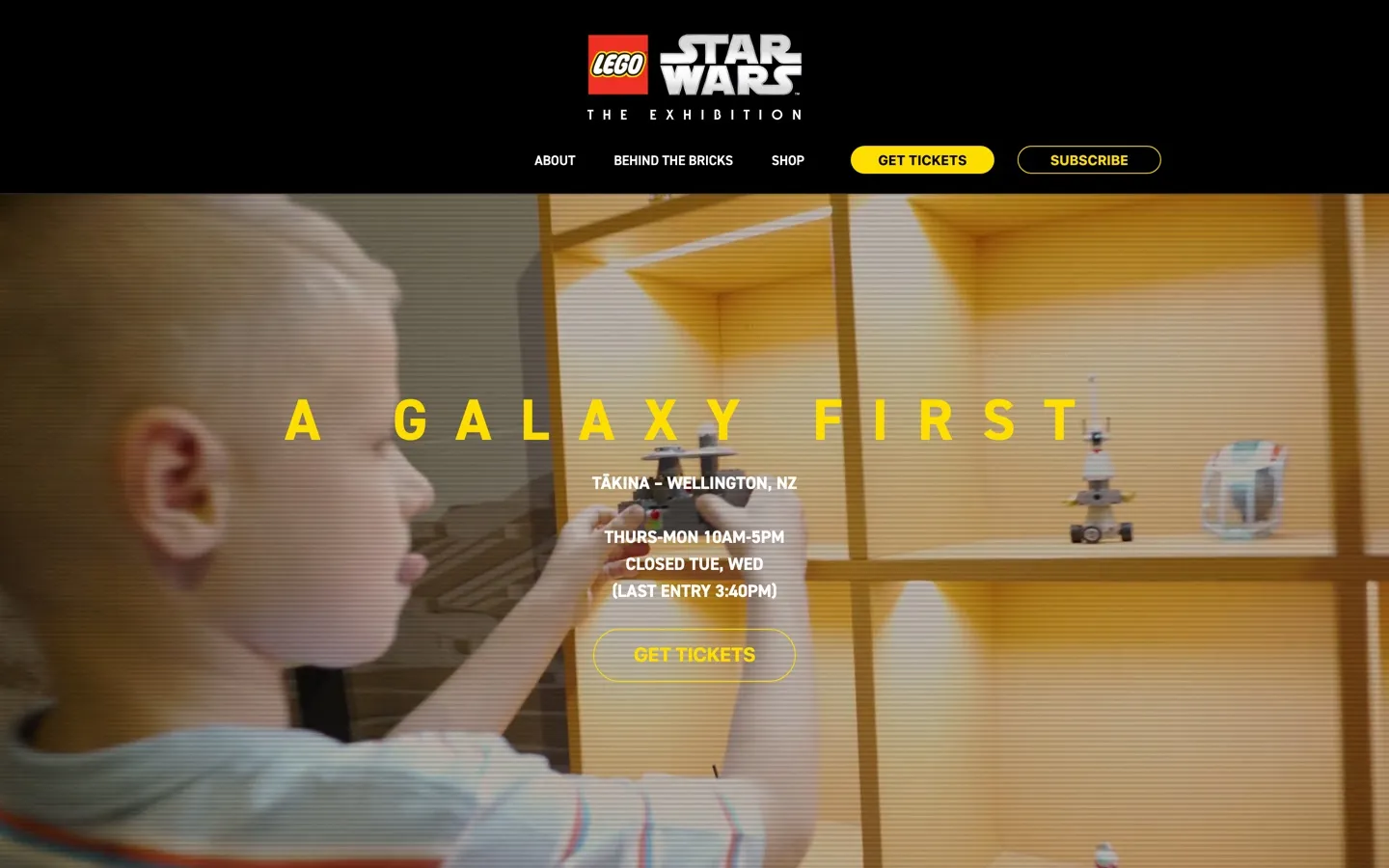
LEGO Star Wars: The Exhibition is a touring exhibition created by Ryan "Brickman" McNaught and his team, the largest collection of life sized LEGO Star Wars models ever assembled. More than eight million bricks, over 25,000 build hours, and models like an eight metre AT-AT built from 96,031 DUPLO bricks. It opened in Melbourne and has since travelled to Tākina in Wellington for its international debut. I built and run the website behind it.
Project Scope
- Custom WordPress build
- Page sections the team arranges themselves
- Live progress feed from the venue
- Video led page designs
- A test copy of the site for safe changes
- Managed hosting, updates and support
The challenge
A touring exhibition is not a business with a fixed address. Each season brings a new city, a new venue, new opening hours, a new ticketing partner and a new set of photography, and the website has to change with it on the week the announcement goes out. A site that needs a developer for every one of those changes becomes a bottleneck at exactly the moment the team is busiest.
One part of the site also changes every single day. Visitors build a giant LEGO mosaic in the venue over the course of the season, and the exhibition wanted the public page to show how far along it is, with a real photograph, not a rough estimate typed in by hand. Nobody was going to keep that up manually for the length of a season.
What I built
A custom WordPress build with twenty five page sections the team can arrange themselves, a live feed from the exhibition floor, and the hosting setup that keeps it all running between seasons.
Pages the team rebuilds themselves
Twenty five ready made page sections, designed for this brand: headline banners, stat panels, galleries, sliders, question and answer lists. Each has its own layout and spacing controls, so a new season is an afternoon of editing rather than a job for a developer, and the design cannot drift.
Live data from the exhibition floor
Every night the exhibition's own system tells the website how far the mosaic has come and sends through a fresh photograph, and the Mystery Mosaic page updates itself. Visitors who added a few squares that afternoon can go home and watch the picture emerge.
Video led without the compromises
Background video headers that fill the screen edge to edge on a wide monitor, swap to a different clip on a phone, and never leave black bars down the side. The team picks the video and how it is cropped; the layout holds itself together.
A safe way to change things
A complete second copy of the site to try things on, and a one step process to publish once they are approved. Nothing reaches an audience of ticket buyers until it has been seen working.
Across the site
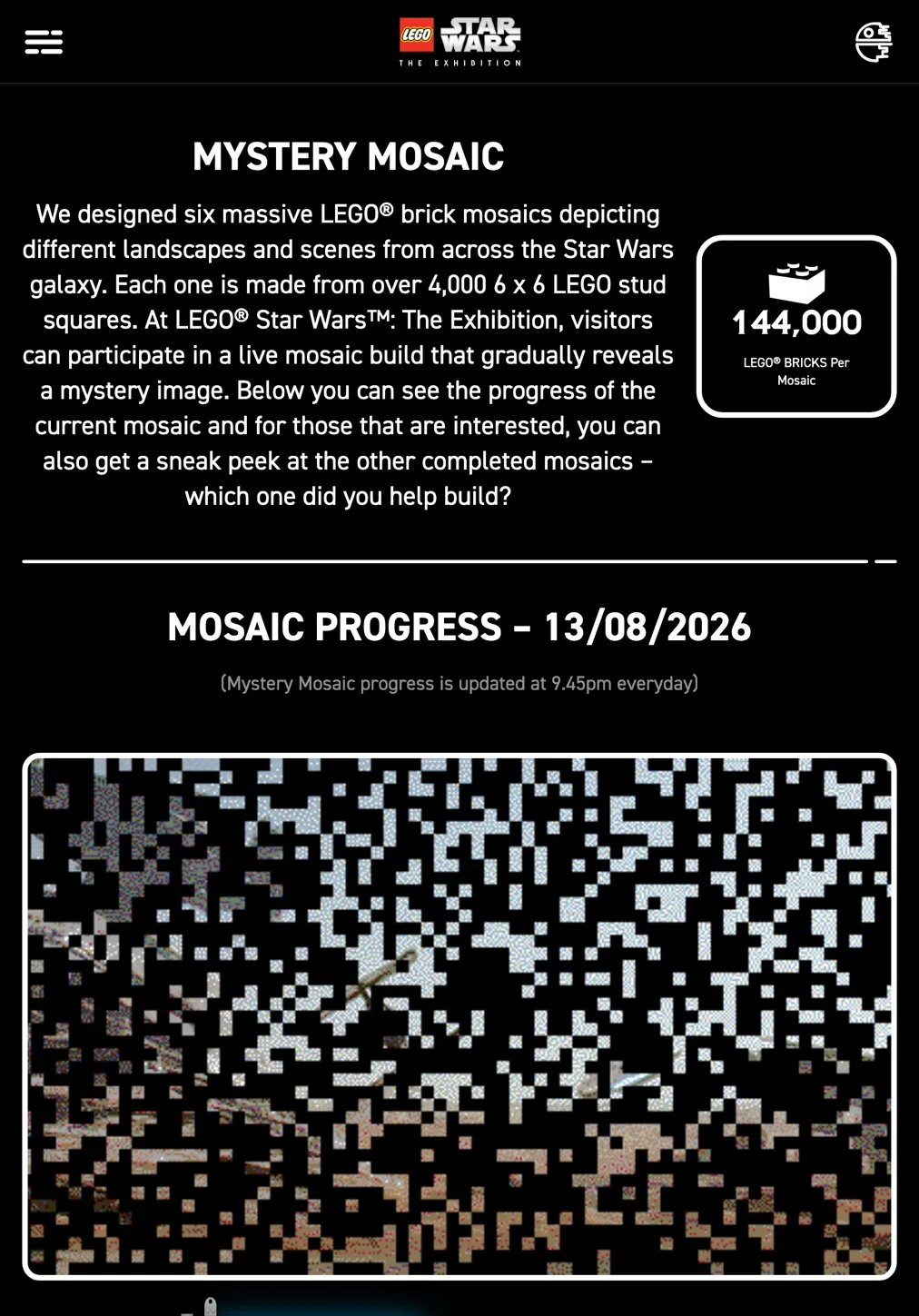
Mystery Mosaic: updated from the venue every night
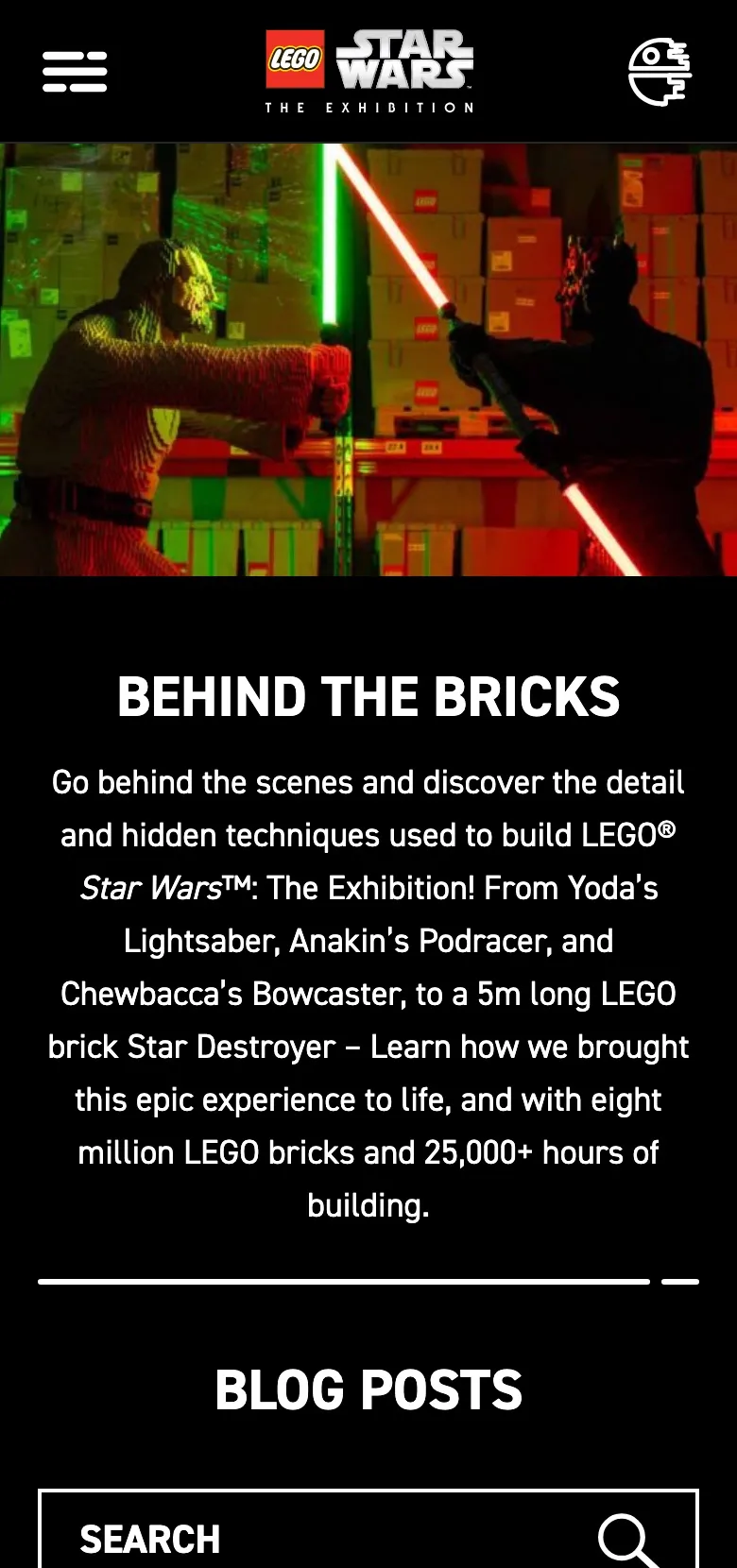
Behind the Bricks: build stories on a phone
The result
The site launched for the Melbourne season in 2025 and carried the exhibition across the Tasman to Wellington in 2026 on the same website. A new country, a new venue, a new ticketing partner and a full change of imagery, handled largely by the exhibition's own team using the page sections they already knew.
The Mystery Mosaic page has been updating itself from the exhibition floor since the first season opened, and the set of page sections has kept growing as the team asks for new ways to lay a page out. That is the part worth taking away: the site got easier to run as it got older, rather than harder.
If you have a website that has to keep changing, or a system somewhere that the website should be talking to, I would like to hear about it. See how I approach WordPress website design and custom web applications, read the Suncoast Express quoting and booking build, or get in touch.
We are absolutely thrilled with the website Phil developed for our latest exhibition! He's not just a web developer; he's a true professional, reliable, responsible, and incredibly efficient. Phil expertly brought our vision to life, delivering all planned functionality and style flawlessly. Beyond that, his valuable expert advice and proactive consideration of potential impacts were invaluable. Working with Phil was a fantastic learning experience, and we wholeheartedly recommend him. His passion shines through in his work, and his dedication to optimising results truly blew us away. Thank you, Phil!

Common questions about this project
Yes, and they do. Every page is assembled from ready made sections with their own layout and spacing controls, so a new season, a new venue or a new set of dates is something the team handles in house. Bigger changes still come to me, which is the arrangement most teams end up wanting.
The exhibition runs its own system in the venue. Each night at the same time it sends the website how far along the build is, along with a fresh photograph, and the Mystery Mosaic page updates itself. Nobody logs in, and nobody has to remember.
A page builder gives you every option, which is exactly the problem when several people edit a site over several years. Building the sections to order gives the team the choices that make sense for their brand and nothing else, so the site cannot drift out of design. It is also faster for visitors, because each page loads only what it actually uses.
Regularly. This one takes its live data straight from a system running inside the exhibition. I have also built quoting, booking and payment flows for a freight company, and connected websites to customer databases, booking systems and payment providers. If the information already exists somewhere else, the website usually should not be asking someone to type it in again.
Yes. This site runs on managed hosting with its own test copy, regular software updates, monitoring and security checks. For a site pointing visitors at ticket sales for a season with a fixed end date, a day offline is expensive in a way that is easy to underestimate.
Anything from a small business website through to long running builds like this one. The common thread is that the client ends up owning something they can run, not something they have to keep paying to change.