Project
AHP Hub
Twelve free calculators and planners for allied health practitioners, all running in the browser
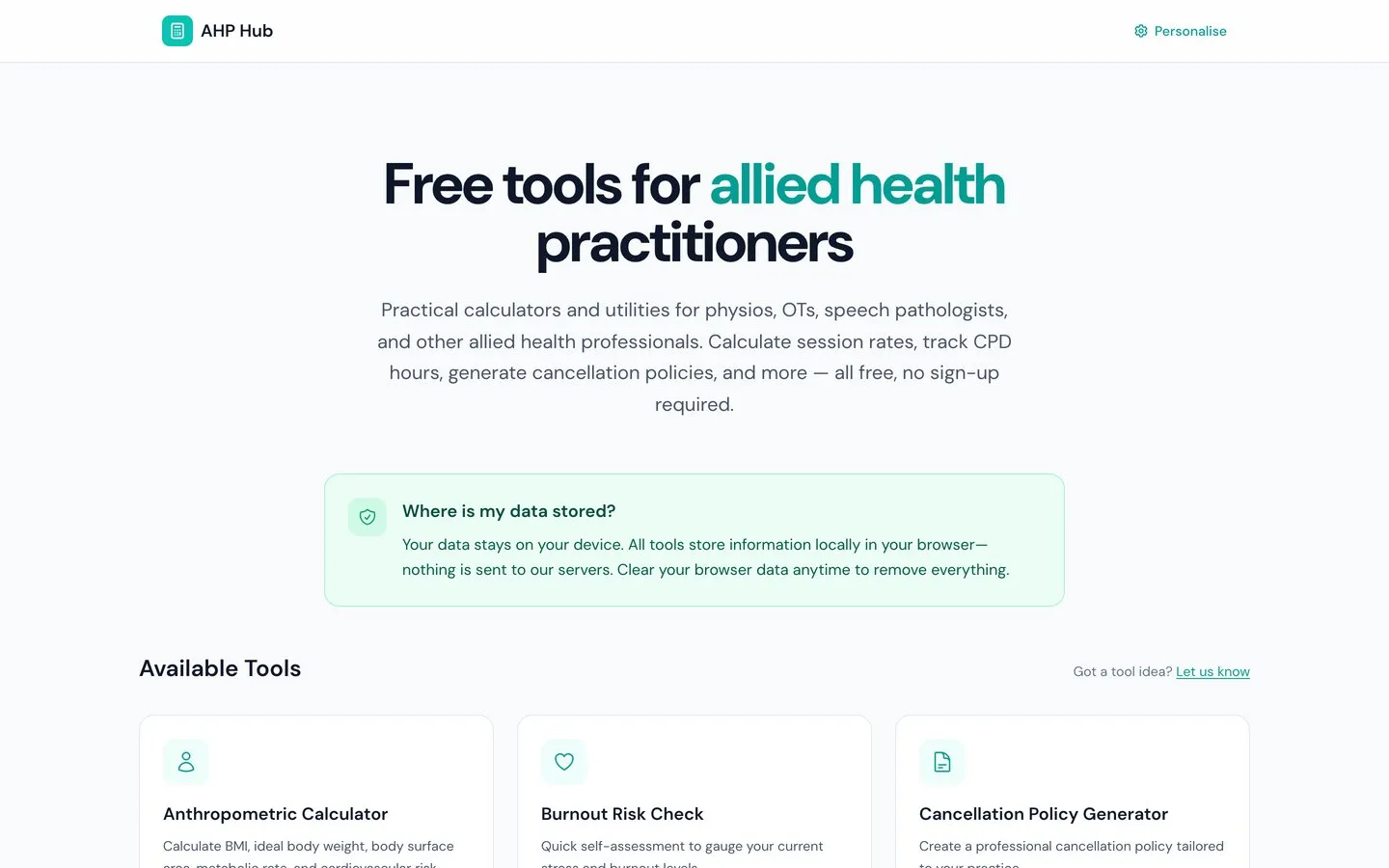
AHP Hub is a set of free tools for allied health practitioners in Australia: physiotherapists, occupational therapists, speech pathologists, psychologists, dietitians, exercise physiologists and podiatrists. Twelve calculators and planners, most of them aimed at the parts of a practitioner's week that are not client care. There is no account and no sign-up, so anyone can open a tool and start using it straight away.
Project Scope
- Deciding what to build
- Interface design
- Twelve interactive tools
- Copywriting
- Web application build
- Hosting and ongoing updates
The challenge
Allied health practitioners lose hours every week to work that is not seeing clients. Setting a session rate that actually covers the cost of running the practice. Tracking professional development hours against registration requirements. Logging supervision. Keeping a vehicle logbook for tax. Writing a cancellation policy that holds up. Most of it gets done in a spreadsheet somebody built years ago, or inside practice software that charges a monthly fee and bundles it with a pile of features nobody asked for.
The second half of the problem is the information itself. Anything a practitioner types into a tool sits uncomfortably close to their clinical work, and a site that collects it takes on obligations nobody wants on either side. So the tools had to be genuinely useful without ever becoming a place where sensitive information is kept.
What I built
Twelve tools, each one built to do a real job properly rather than just collect answers, sharing a single home that gets a practitioner to the right one in a few seconds. It is a custom web application rather than a website with a calculator bolted on.
Tools that finish the job
A calculator that hands back a number leaves the hard part to the reader. The caseload planner gives a weekly client number, then shows where every other hour of the week goes and says plainly whether that workload is sustainable. Each tool is built to end at an answer somebody can act on.
Nothing leaves the device
Every tool keeps its data in the browser on the practitioner's own machine. Nothing is sent to a server, nothing is collected, and clearing browser data removes all of it. That means a practitioner can use the tools alongside whatever practice system they already run, without taking on any new obligations over the information they enter.
Built to the Australian rules
The professional development tracker follows the registration standards practitioners are actually held to, and the vehicle logbook follows the tax office method for claiming motor vehicle expenses. A generic calculator would have been quicker to build and far less use to anybody.
Nothing in the way
No sign-up, no trial, no card, no email address. A practitioner can follow a link from a colleague straight into a working tool, and what they enter is still there next time they open it on the same device.
Across the tools
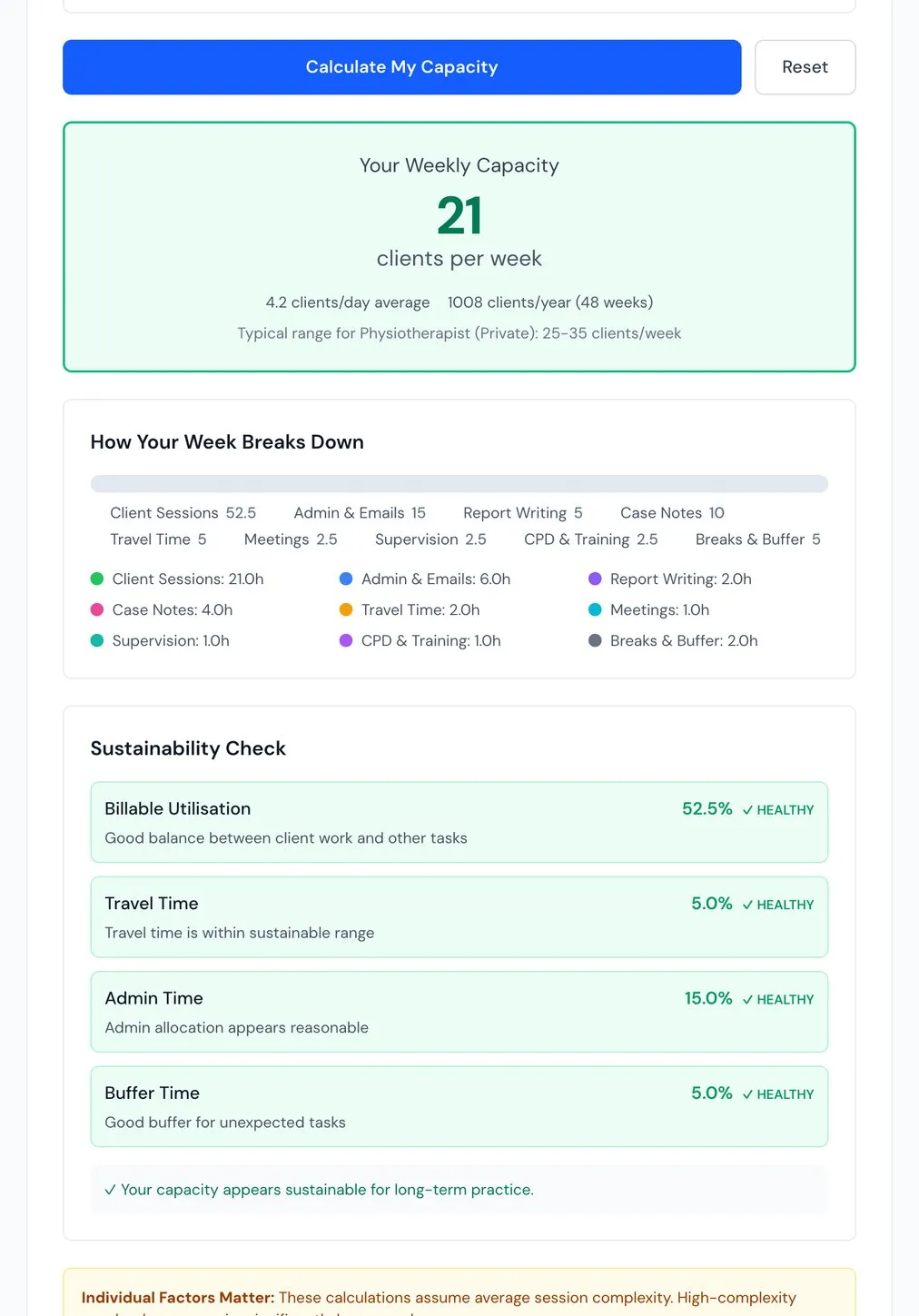
Caseload planner: the answer, then the reasoning behind it
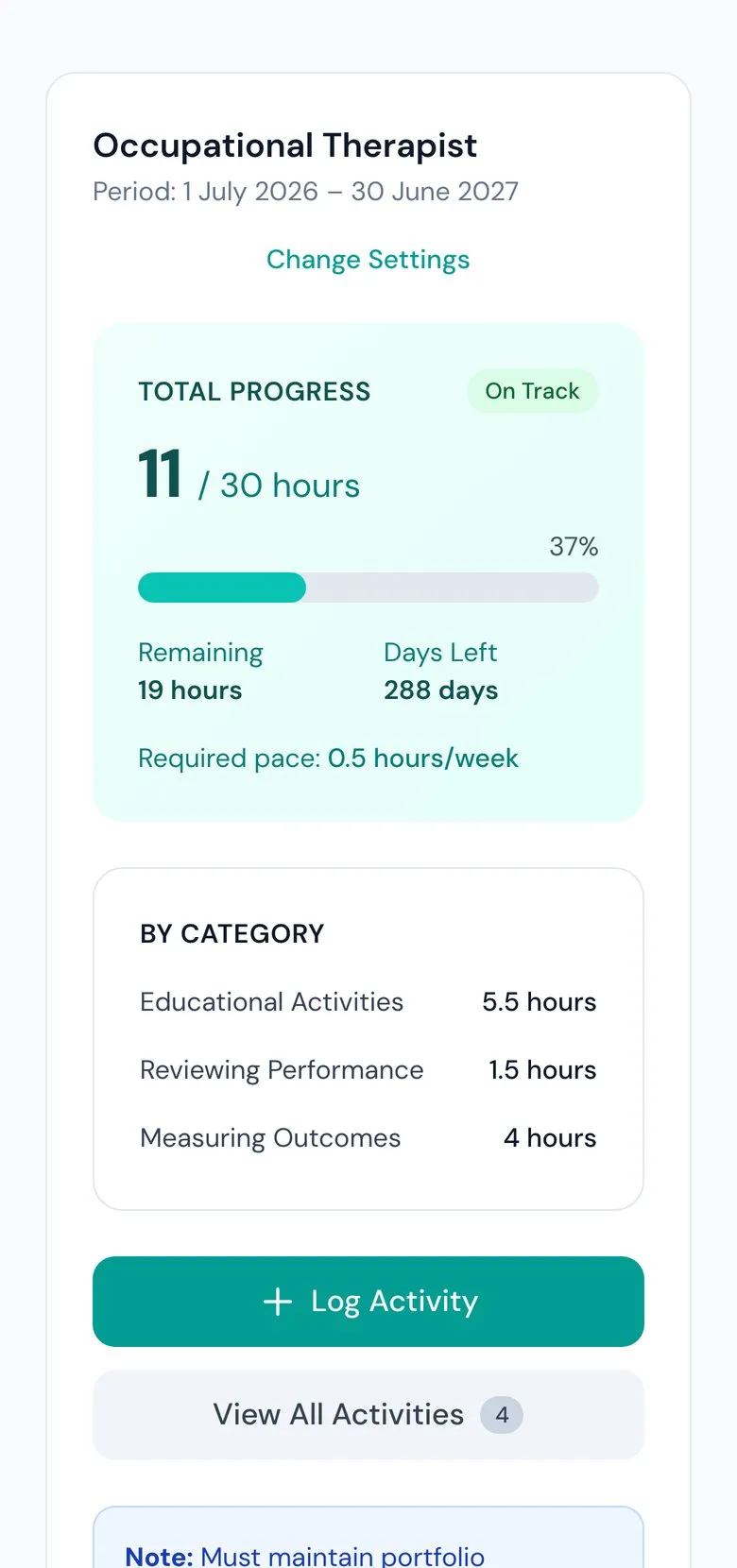
Development hours, tracked on a phone
The result
Twelve tools are live and working, with three more flagged on the site as coming: NDIS funding, price guide and travel rules. The set grows over time, which suits a product whose value is the breadth of what it covers. Each tool added gives a practitioner another reason to come back.
The parts worth taking from this project are not specific to allied health. A free tool that solves one real problem properly earns attention from people long before they are ready to buy anything, and keeping their data on their own device removes the objection that usually stops them trying it.
If you have a job in your industry that everyone still does in a spreadsheet, that is usually a tool worth building. Read more about custom web applications, see the Suncoast Express quote and booking system for a different shape of the same problem, or get in touch.
Common questions about this project
A set of twelve free tools for allied health practitioners in Australia: calculators and planners for the parts of practice that eat up the week. Working out what to charge, tracking professional development hours, planning a realistic caseload, logging supervision, keeping a vehicle logbook, writing a cancellation policy, plus a few clinical calculators. Anyone can open one and use it.
They are free, with no trial period, no usage limit and no card required. There is no account either, so there is nothing to cancel. Optional paid features may be added later, and the core tools stay free.
Nowhere. Every tool saves its data in the practitioner’s own browser, on their own device. Nothing is sent to a server and nothing is collected. Clearing browser data removes it. That was a design decision rather than a technical convenience: a tool used beside clinical work should not become somewhere sensitive information is stored.
Yes. A website shows people information. An application does work for them, which means it has to remember what they entered and apply the rules correctly, every time. There is a lot more that can go wrong. AHP Hub is twelve small applications sharing one home. I also build quoting and booking systems, customer portals and internal tools.
Often, yes. A free tool that solves one real problem is a good way for a business to become useful to people long before they are ready to buy. The work is in picking the right problem and making the tool genuinely finish the job, rather than producing a number the reader still has to interpret.
Less than most people expect, because there is no store of customer information to look after. What it does need is attention to the rules the tools rely on: registration requirements and published rates change, and a calculator quietly working from last year’s figures is worse than no calculator at all.