Project
4X4 Australia
Moving Australia's leading 4WD title off a headless CMS and onto WordPress, without giving up its search rankings
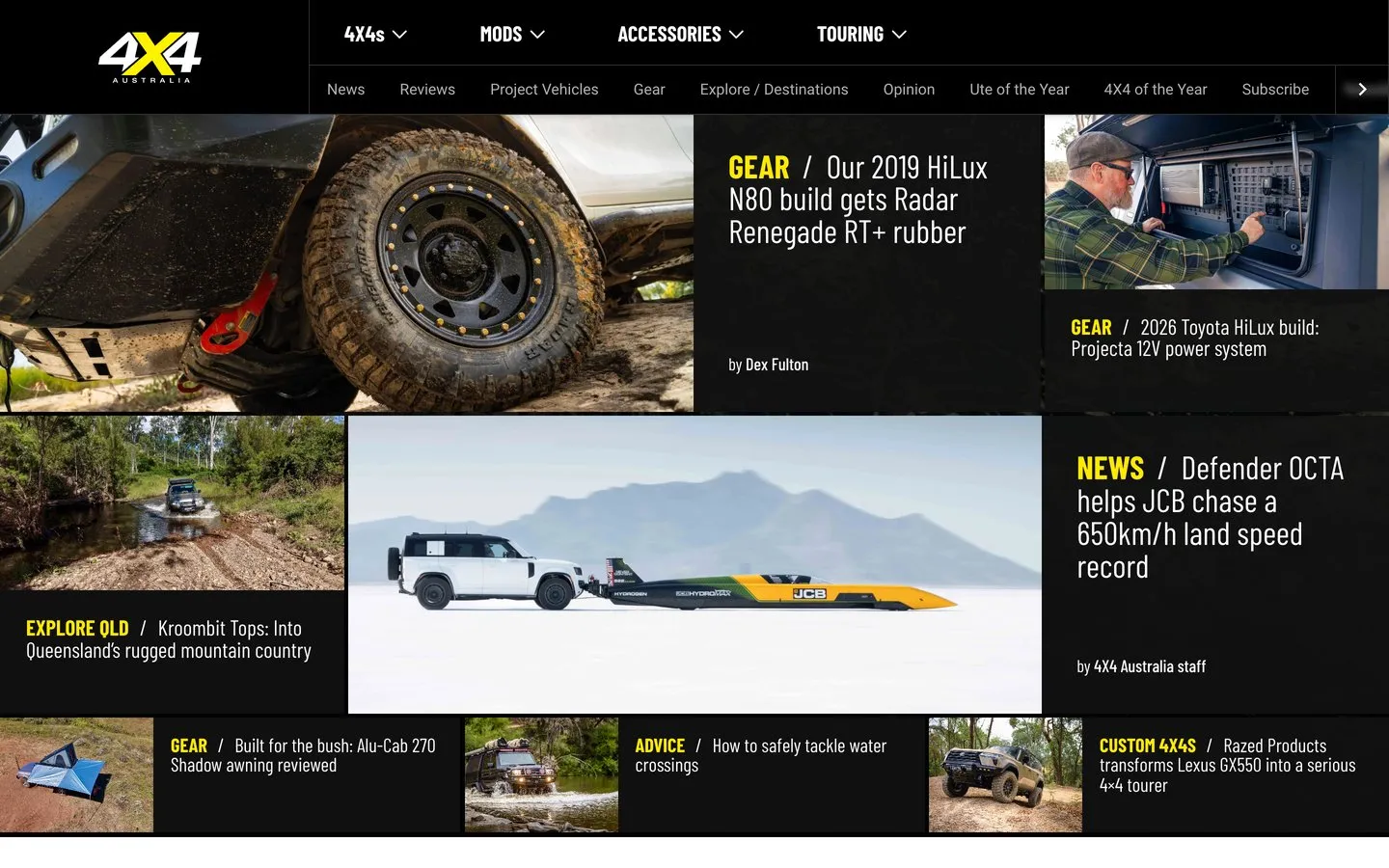
4X4 Australia has been the country's go-to off-road title since 1978, and its website carries an archive of roughly 6,500 articles going back to 2010. Publisher 4x4 Media sells advertising and brand partnerships against that audience, so the website is not a brochure. It is the product. When I came on board it was running as a headless build: content sat in Sanity CMS, the front end was custom code, and the images lived in a separate cloud account.
Project Scope
- Sanity CMS to WordPress migration
- Content, image and redirect migration
- Custom theme and editorial block library
- Advertising and sponsored hub sections
- Search, media delivery and caching
- Hosting, maintenance and support
The challenge
A headless setup is fine while a developer is available for everything. It stops being fine when the editorial team wants to change a page layout, and when the commercial team has sold a sponsored section that needs to be live next week. Every change was a development job, which put a queue in front of work that should have taken an afternoon.
The harder problem was the archive. Fifteen years of articles rank in Google, and that traffic is what the advertising is sold against. A migration that broke web addresses, dropped images or flattened page structure would have taken revenue with it. So the brief was not simply to rebuild the site. It was to move the whole thing, intact, and hand the keys back to the people who publish it.
What I built
A WordPress platform designed for a publisher rather than a business website, sharing one codebase with sister title WhichCar so that work done once serves both mastheads.
The whole archive, moved intact
Roughly 6,500 articles, their images and their video came across into WordPress, with every old web address mapped to its new one so search rankings and inbound links carried over. Images were rehosted onto a global delivery network so they load quickly wherever the reader is.
Pages the editors build themselves
A custom library of more than forty content blocks covers everything the title publishes: reviews with pros and cons, spec tables, galleries, comparison layouts and landing pages. The editorial team assembles them in WordPress. No developer in the loop, no queue.
Commercial sections that pay for themselves
Sponsored brand hubs let 4x4 Media sell a whole section of the site to an aftermarket brand. One of them turns a spreadsheet of stockists into a searchable map of Australia, filtered by name and region, and it was load tested to five hundred locations. The commercial team can launch a hub without booking development time.
One codebase, two mastheads
4X4 Australia and WhichCar run on the same underlying build, with each title's branding applied through a thin overrides layer. A new feature is paid for once and rolled out to both, so the second title gets it for the cost of the rollout.
Across the site
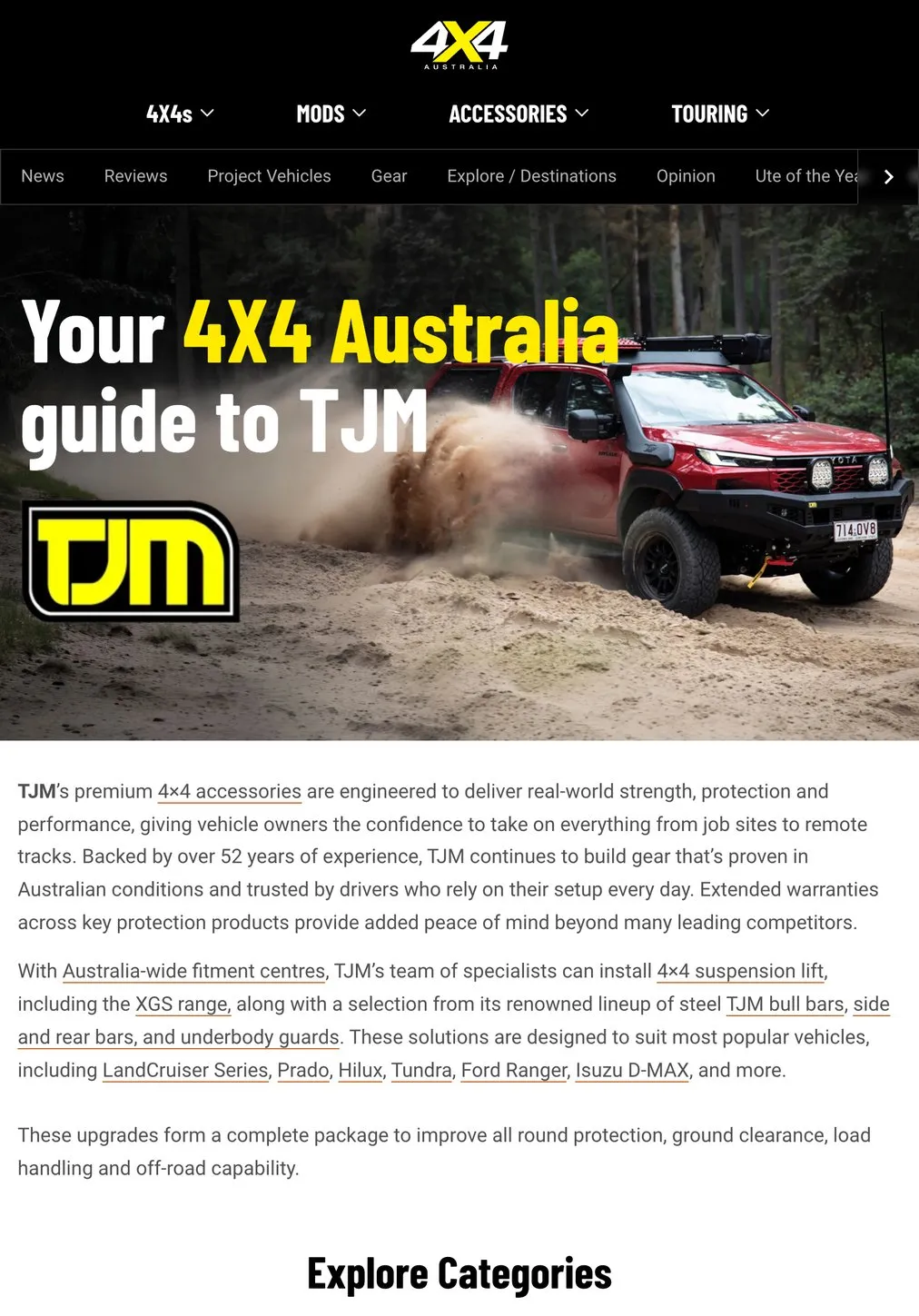
A sponsored brand hub, built by the team
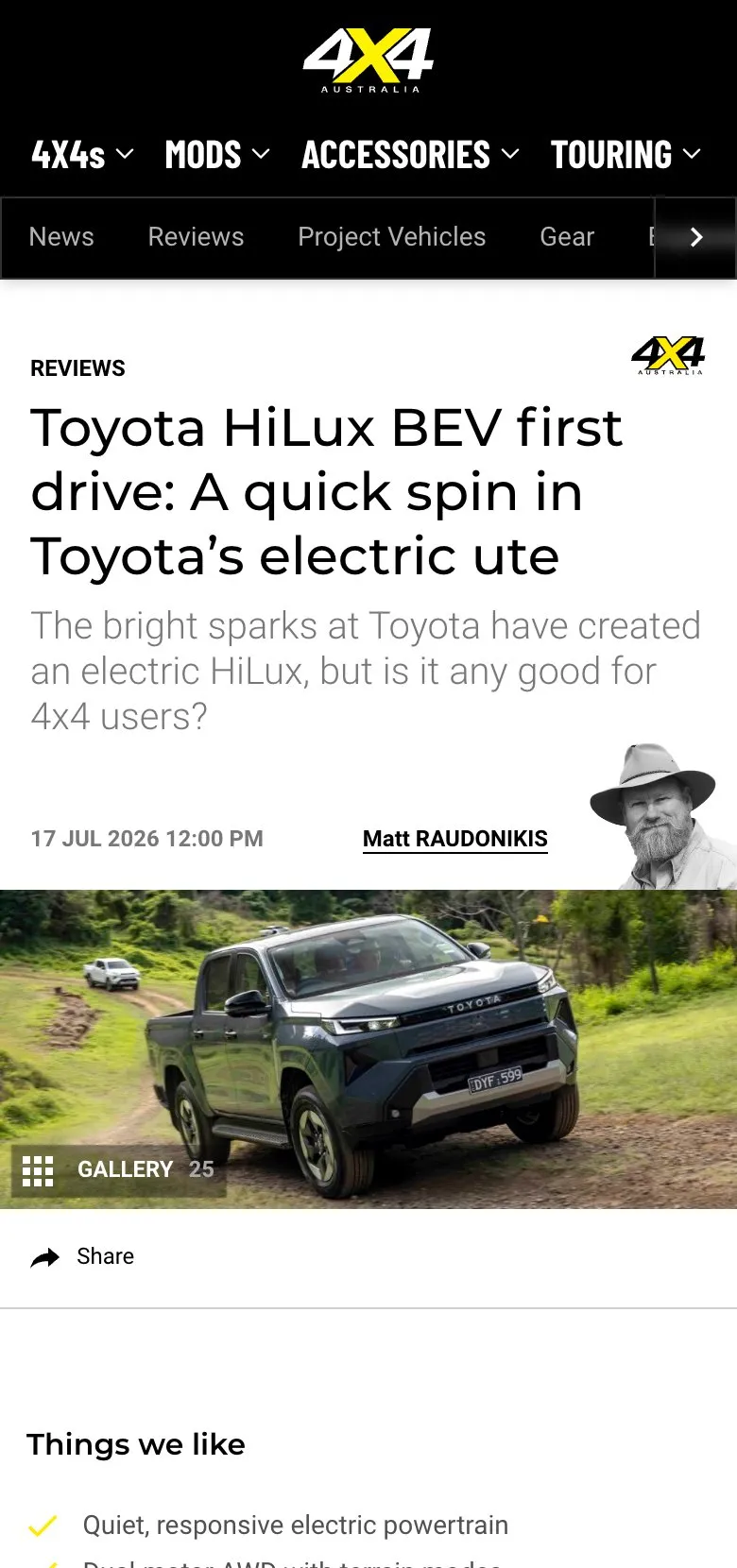
A vehicle review on a phone
The result
4X4 Australia moved onto WordPress in 2025 with its archive and its rankings intact, and the publisher reported measurable gains across Google's Core Web Vitals once it was live. The editorial team now builds and changes pages themselves, and the commercial team can put a sponsored hub live without waiting on a development slot.
The site has stayed with me since. That covers hosting, updates and support, the security and performance work a site this size needs, and new commercial features as 4x4 Media sells them.
If you are weighing up a platform move, inherited a website nobody can edit, or need a build that can carry real traffic, that is the work I do. See how I approach WordPress consulting, read about the Suncoast Express quote and booking system, or get in touch.
Since migrating, we’ve seen measurable improvements across key Google Core Web Vitals, including faster First Contentful Paint, quicker Time to First Byte, First Paint, and DOM Content Loaded. These are big wins for both our audience and our SEO.

Common questions about this project
Yes, and it is the part of the job that matters most. Every old address is mapped to its new one before launch, so links from Google, other websites and social posts still land on the right page. On 4X4 Australia the archive goes back to 2010 and the rankings on it are the business, so the redirect map was built and tested alongside the content import rather than bolted on at the end.
The 4X4 Australia site carries roughly 6,500 articles plus their images and video, and the same migration moved tens of thousands across the wider publishing group. Nothing is retyped by hand. The move is automated and repeatable, so it can be run against a test copy, checked, corrected and run again until the result is right, then run once more for real.
It is, with the right build behind it. Images load from servers close to the reader, site search runs on its own dedicated engine so a busy search box cannot slow the rest of the site down, and finished pages are held ready to serve rather than rebuilt on every visit. After migrating, 4x4 Media reported measurable improvements across Google Core Web Vitals.
They can, and it is usually cheaper than running two. 4X4 Australia and sister title WhichCar share a single theme and plugin set, with each title keeping its own branding through a small overrides layer. A new block or feature is built once and rolled out to both.
Yes. 4X4 Australia has been on ongoing hosting, maintenance and support since the migration, covering WordPress and plugin updates, security, performance work and new commercial features as the business needs them.
Yes. Publishing has needs most business websites do not: a large archive, editorial workflows, advertising integration and traffic that has to be protected through any change. If you are weighing up a platform move, I am happy to look at it with you.