Project
CyclingTips
Six years on one of the world's best known cycling publications, ending as their Head of Web Development
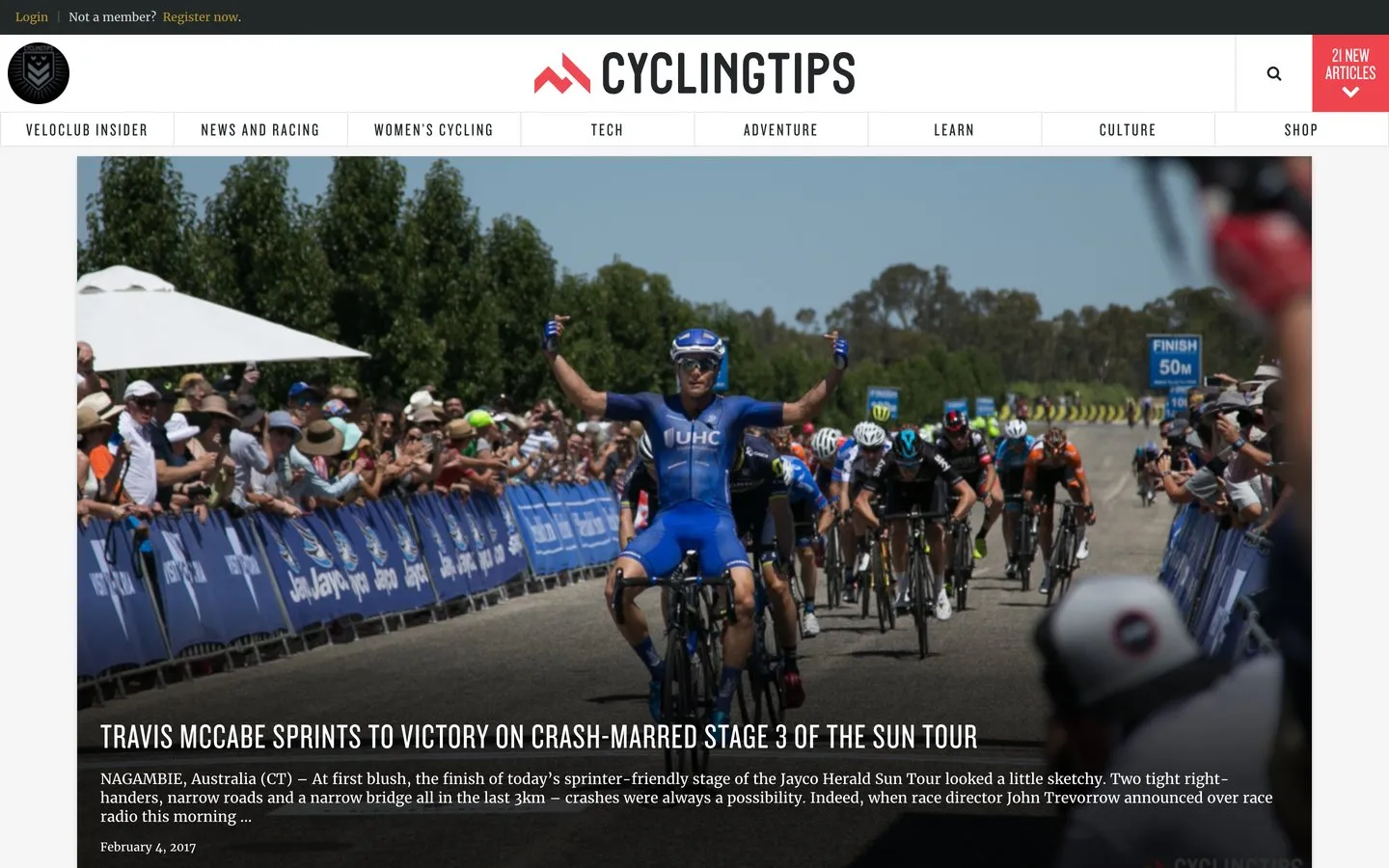
CyclingTips was one of the best known cycling publications in the world, covering professional racing and riding alike. It was also the first publication I ever worked on. I started as a freelancer and finished as their Head of Web Development, and the work ran from 2012 to 2018.
The screens on this page are the site as it ran in 2017. The title was later acquired and folded into another publication, so the old address now leads somewhere else. Nothing here describes that site.
Project Scope
- Six years, freelance then Head of Web Development
- Responsibility for the publication's website
- A paid membership with its own login
- A redesign along the way
- Reads properly on phones and tablets
The challenge
A publication's website is not a brochure that sits still between updates. It is the business itself, and it is never finished. Journalists are writing into it all day, readers arrive in a rush the moment a race finishes, and the archive behind it only ever grows. A site built the way most business websites are built would fall over under any one of those, let alone all three at once.
On top of that, the site had to earn a living. Advertising had to have somewhere to go without ruining the reading, and a paid membership had to sit alongside the free articles rather than fencing people out of them. Those two pull in opposite directions, and holding them apart is most of the job.
What I worked on
A publication that size has a large editorial team and more than one person on the technical side, so this was never a one person job. What I held was the website itself: what got built, in what order, and whether it kept standing.
A site that kept up with the newsroom
Editors published into it constantly, and it had to take that without slowing down for anybody reading. The homepage counted the new articles waiting, which tells you the pace it was working at.
Sections readers could actually navigate
Racing, women's cycling, tech, adventure, culture and more, each with its own sections beneath it. Years of articles stay findable when the shelving is right, and turn into dead weight when it is not.
A paid membership beside the free site
Members logged in and got their own part of the publication, while everything else stayed open to anyone. A separate piece of software sat behind the membership, and I worked on the side of it that met the website.
Rebuilt without starting again
The look changed across those six years while the publication kept publishing through it. The archive came with it rather than being left behind, which is the harder way to do it and the only one that does not cost you your readers.
Across the site
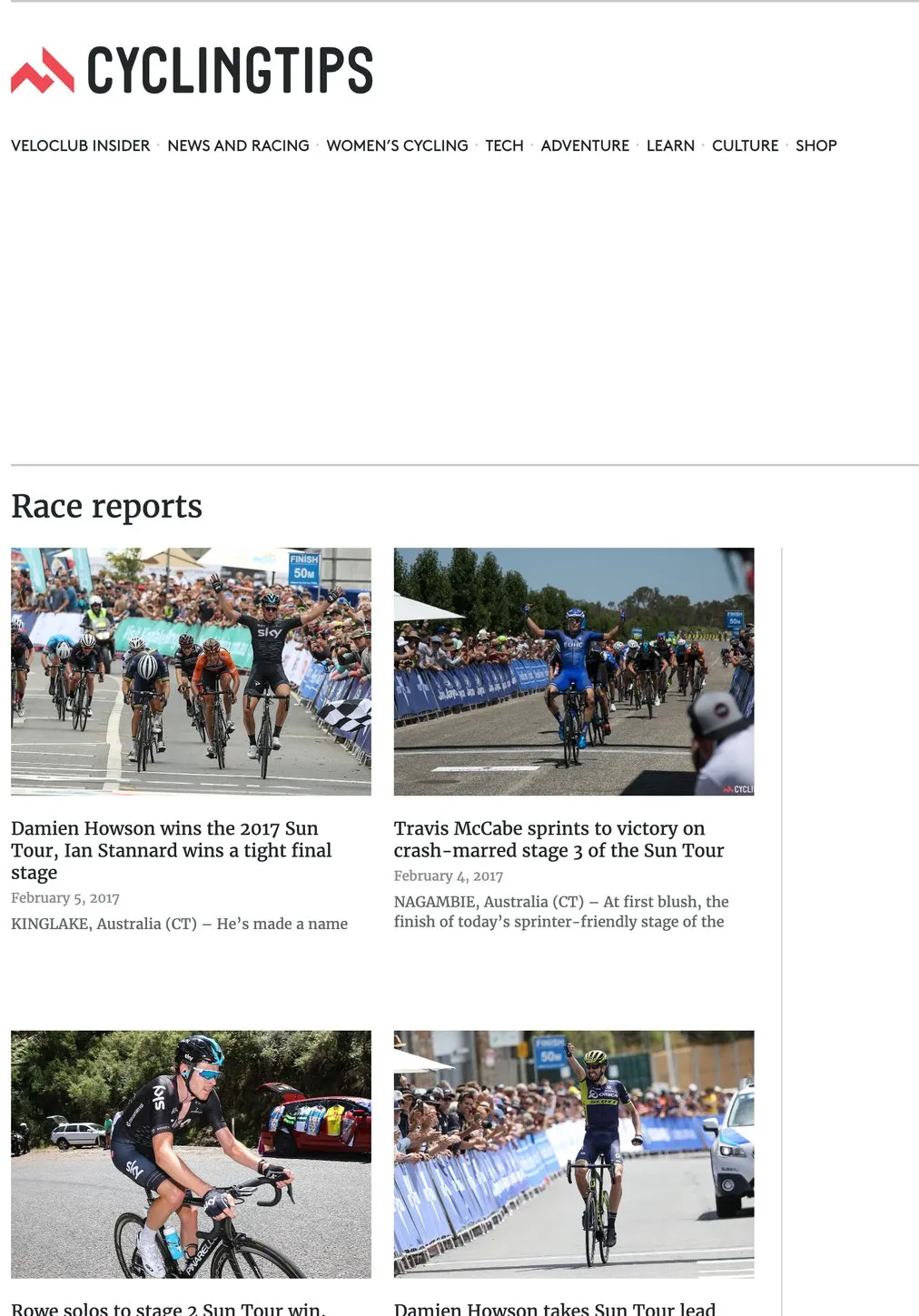
Race reports, one section of many
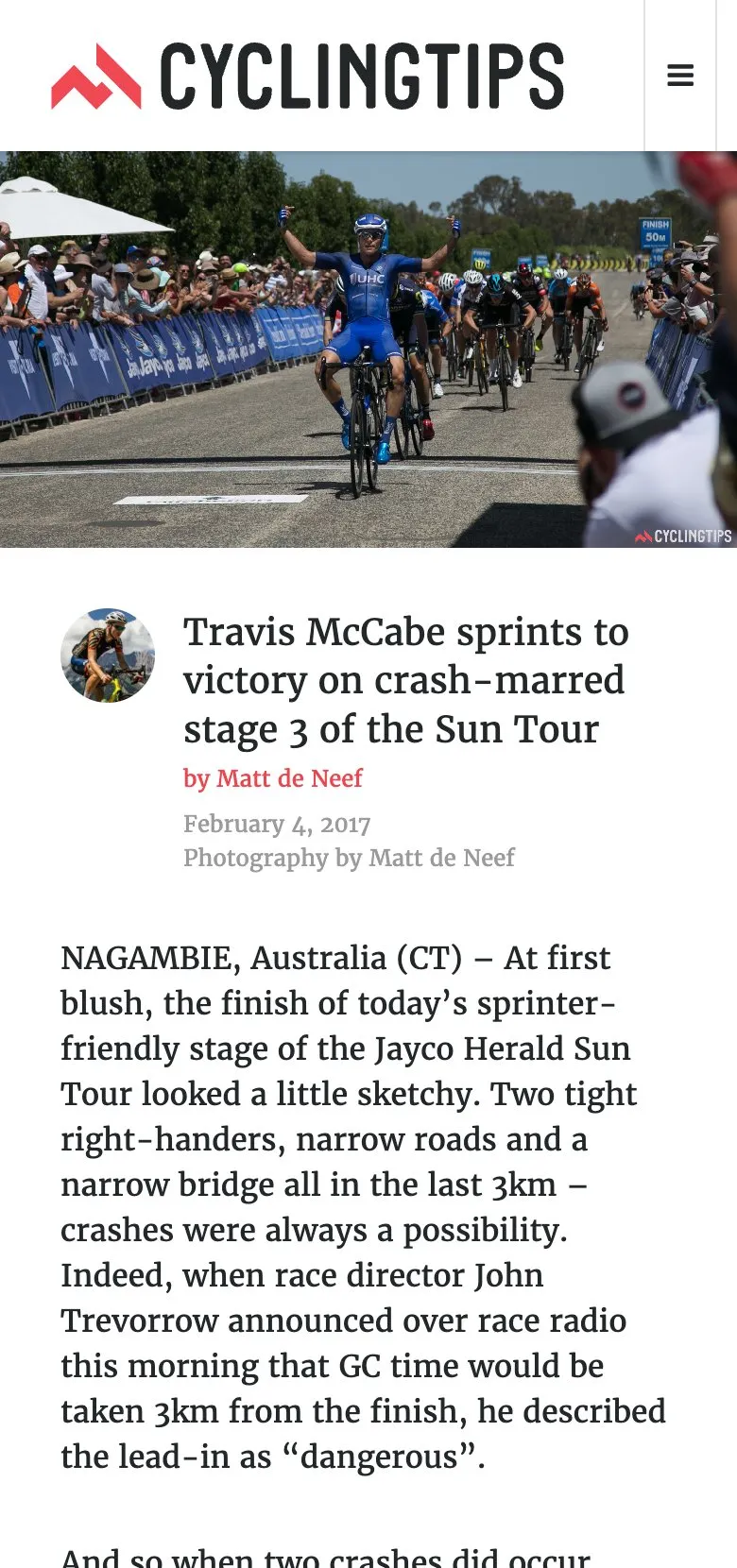
Reading a race report on a phone
The result
Six years is a long time to hold one website, and it is the part of this worth paying attention to. Anyone can launch a site. Keeping one standing while a newsroom publishes into it every day, through a redesign and a paid membership arriving on top, is a different skill entirely.
It also started something. This was the first publication I worked on, and publishing has been a thread through everything since. If your business runs on what you publish, the questions are the same ones: how fast, how much, how findable, and how does it pay for itself.
See the same work today on WhichCar and 4X4 Australia, read about building something custom, or get in touch.
Common questions about this project
You own the website as a whole rather than fixing one thing at a time. That means deciding what gets built and in what order, keeping the site fast and reliable while journalists publish into it all day, and making sure a decision made this month does not become next year’s problem. On a publication the website is the business, not a brochure for it.
Yes, but it has to be built for it. A site with that much going through it has editors working in it constantly, readers arriving in waves whenever a race finishes, and an archive that grows forever. Every one of those pulls in a different direction, and a site built for a business that publishes monthly will not survive any of them.
Most of the site stays open, because open pages are how people find you, and a defined part sits behind a login. That means knowing who someone is on every page, keeping the join path short enough that people finish it, and making the members-only part feel worth paying for rather than feeling like a wall.
Yes. WhichCar and 4X4 Australia are both current, so the thread that started here runs to today. Publishing has stayed one of the areas I work in most, because the problems are genuinely hard and they repeat: volume, speed, archives, advertising and subscriptions all pulling against each other.
CyclingTips was acquired and folded into another publication, and the address now points somewhere else entirely. The screens on this page are the site as it ran while I was there, taken from a web archive rather than from anything live.